Recent EV Charging Fire Incidents in India: Are Commercial Buildings Ready for the EV Revolution?
India is rapidly embracing electric mobility. With strong government incentives, rising fuel prices, better charging infrastructure, and growing environmental awareness, electric vehicles (EVs) are becoming a common sight on Indian roads.
As a result, shopping malls, hotels, hospitals, IT parks, commercial offices, educational institutions, and residential communities are installing EV charging stations at an unprecedented pace.
But alongside this rapid adoption comes an important question that many facility owners are overlooking:
Is your building's electrical infrastructure truly ready for EV charging?
Recent fire incidents across India have highlighted that while electric vehicles continue to become safer through advanced battery technologies and Battery Management Systems (BMS), the electrical infrastructure supporting EV charging often remains the weakest link.
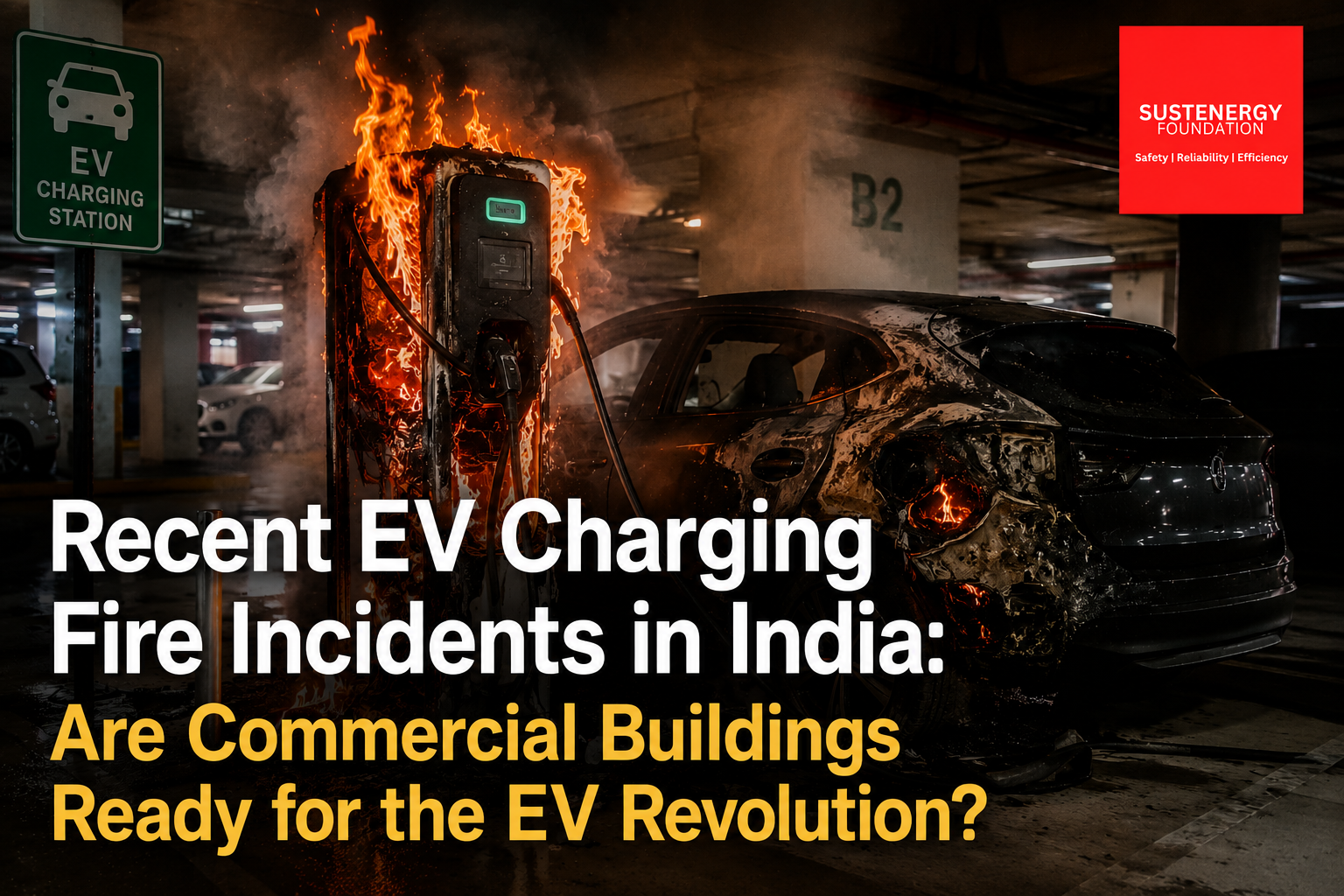
Recent EV Charging Fire Incidents Raise Serious Questions
India has witnessed several unfortunate fire incidents in 2026 where EV charging infrastructure is suspected to have played a role.
One of the most tragic incidents occurred in Noida, where a fire reportedly started near an EV charging point in the parking area of a multi-storey residential building. Initial reports suggested that sparks during charging ignited nearby vehicles, while dense smoke quickly spread through the building, trapping residents inside. The incident claimed two lives and highlighted the dangers of installing EV charging stations without proper electrical safety planning.
In Ghaziabad, another electric vehicle caught fire while charging inside a residential complex. Although no lives were lost, the incident required a major rescue operation and raised concerns about charging systems installed without comprehensive electrical safety assessments.
Earlier this year, a devastating fire in Indore, reportedly linked to an EV charging point, escalated after nearby LPG cylinders became involved. The fire resulted in multiple fatalities and demonstrated how electrical faults can quickly turn into catastrophic disasters when combustible materials and inadequate fire protection coexist.
While investigations are still underway in several cases, one message is becoming increasingly clear:
The safety of an EV depends not only on the vehicle—but also on the electrical system that powers it.
The Real Risk Often Lies Inside the Building
When people hear about EV fires, battery defects are usually blamed first.
However, electrical safety professionals know that many incidents actually begin outside the vehicle, within the building's electrical distribution system.
Across India, many commercial buildings are adding EV charging stations without evaluating whether their existing electrical infrastructure was designed to handle continuous high-current loads.
This creates hidden risks that often remain unnoticed until something goes wrong.
Some of the most common issues include:
- Undersized electrical cables
- Overloaded distribution boards
- Loose electrical terminations
- Incorrect circuit breaker selection
- Inadequate earthing systems
- Missing or faulty RCCBs/RCDs
- Lack of Surge Protection Devices (SPDs)
- Poor ventilation around charging areas
- Charging through extension boards or non-certified outlets
- No thermal monitoring of charging panels
- Aging switchgear not designed for continuous EV charging loads
These issues may not show obvious warning signs—but over time they can lead to overheating, insulation failure, arcing, and ultimately electrical fires.
Why Commercial Buildings Face Higher Electrical Risks
Commercial facilities present a very different electrical environment compared to individual homes.
A hotel may have multiple guest vehicles charging simultaneously.
A shopping mall may support dozens of charging sessions every day.
Corporate offices encourage employees to charge their vehicles throughout working hours.
Hospitals increasingly install charging stations for ambulances, doctors, staff vehicles, and visitors.
Most commercial buildings already operate close to their designed electrical capacity. Introducing several fast EV chargers without upgrading transformers, switchboards, feeders, protection systems, and distribution panels significantly increases electrical loading.
Continuous high-current operation also accelerates the deterioration of cable joints and electrical connections, increasing the risk of overheating and fire.
This is why commercial electrical safety must evolve alongside India's EV revolution.
Installing an EV Charger Is More Than Plugging into the Grid
An EV charging station is not simply another electrical appliance.
It is a high-power electrical installation that demands careful engineering, proper protection, and regular inspection.
Before installing EV charging infrastructure, every commercial building should undergo a detailed technical assessment that includes:
- Electrical load analysis
- Transformer capacity verification
- Distribution board assessment
- Cable ampacity calculations
- Earthing system evaluation
- Earth Fault Loop Impedance (EFLI) testing
- RCCB/RCD protection verification
- Surge protection assessment
- Dedicated circuit protection
- Emergency isolation arrangements
- Fire detection near charging zones
- Adequate ventilation
- Thermal imaging of charging panels
- Emergency response planning
Without these precautions, even certified EV chargers may become unsafe when connected to an inadequate electrical system.
Why Electrical Safety Audits Are More Important Than Ever
As EV adoption accelerates, periodic Electrical Safety Audits have become one of the most effective ways to identify hidden electrical hazards before they result in costly failures or fire incidents.
Unlike a routine maintenance inspection, an Electrical Safety Audit evaluates the health, reliability, and safety of the complete electrical installation.
A professional Electrical Safety Audit in India typically includes:
- Electrical load assessment
- Transformer loading analysis
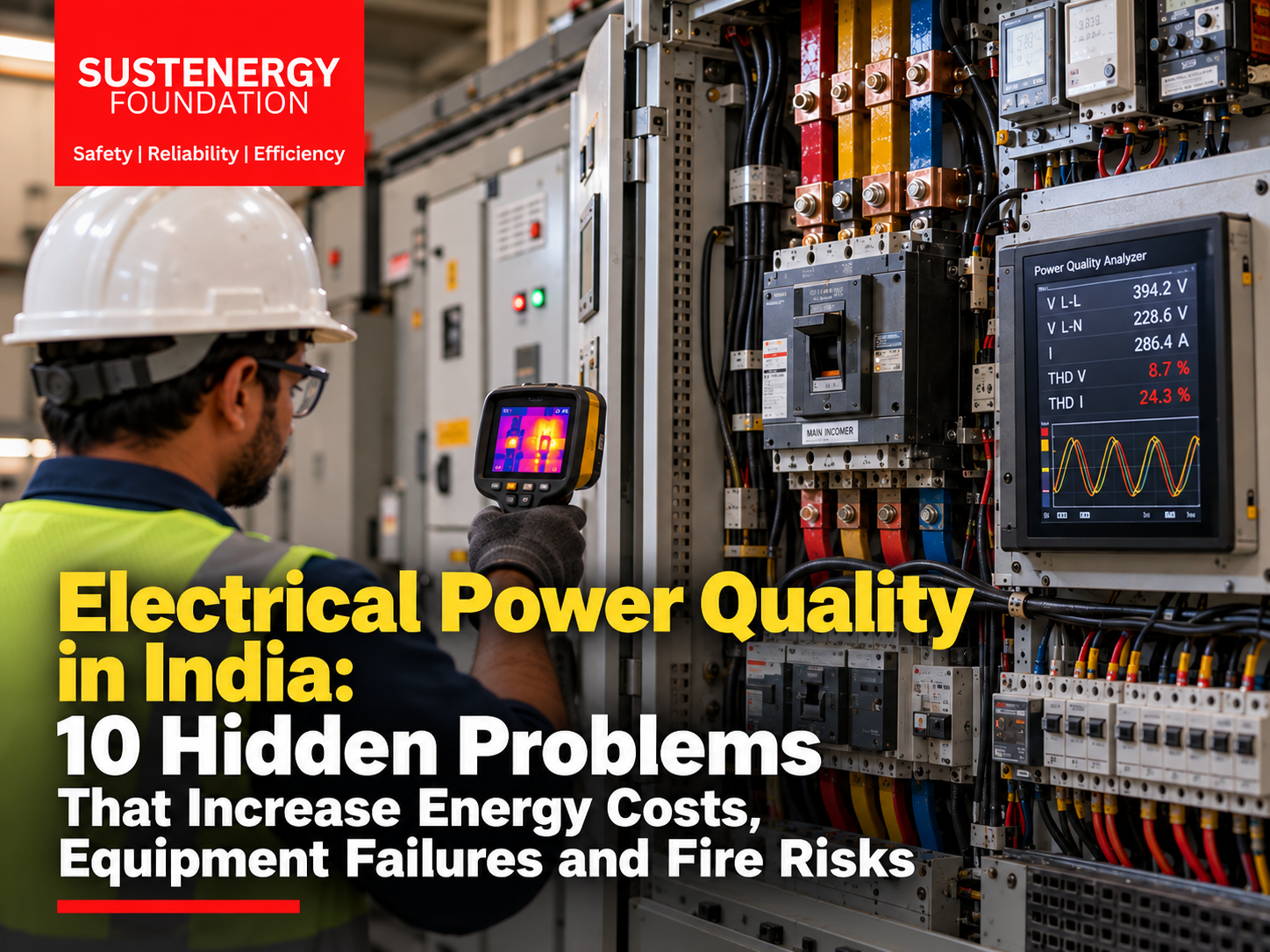
- Thermographic inspection (Infrared Thermal Imaging)
- Cable condition assessment
- Distribution board inspection
- Protective device testing
- Earth resistance measurement
- Earth Fault Loop Impedance (EFLI) testing
- RCCB/RCD performance testing
- Power quality analysis
- Harmonic analysis
- EV charging circuit inspection
- Compliance verification with applicable Indian Standards, National Building Code (NBC), and relevant electrical safety regulations
These inspections help identify overloaded circuits, deteriorating electrical connections, inadequate protection systems, and developing fire hazards long before they become dangerous.
Building a Safer EV Charging Infrastructure
As India moves toward a cleaner transportation future, commercial buildings should take a proactive approach rather than reacting after an incident occurs.
Some essential best practices include:
- Conduct periodic Electrical Safety Audits
- Design dedicated EV charging distribution systems
- Upgrade transformers and switchgear where necessary
- Continuously monitor transformer loading
- Perform regular thermographic inspections
- Test RCCBs, EFLI, and earthing systems periodically
- Train facility teams on EV charging safety and emergency response
- Update fire evacuation procedures for charging zones
- Follow manufacturer-recommended preventive maintenance schedules
Electrical safety should grow alongside EV infrastructure—not after an accident.
Why Choose Sustenergy Foundation for EV Charging Electrical Safety?
As EV charging infrastructure expands across India, building owners need more than just charger installation—they need confidence that their entire electrical system can safely support it.
Sustenergy Foundation specializes in Electrical Safety Audits for commercial buildings, helping organizations identify hidden electrical hazards before they lead to equipment failures, operational disruptions, or fire incidents.
Our audit services include:
- Electrical Safety Audit
- Thermographic Inspection
- Earth Resistance Testing
- Earth Fault Loop Impedance (EFLI) Testing
- RCCB/RCD Testing
- Power Quality Analysis
- Electrical Load Study
- Transformer Health Assessment
- Distribution Board Inspection
- Compliance Assessment with Indian Standards and the National Building Code
Whether your facility is a hotel, hospital, office building, manufacturing plant, shopping mall, educational institution, or industrial facility, ensuring that your electrical infrastructure is EV-ready is no longer optional—it is essential.
Conclusion
India's electric mobility revolution is creating exciting opportunities for businesses and building owners. However, the recent EV charging fire incidents serve as a reminder that the success of this transition depends not only on advanced vehicles but also on the safety of the electrical infrastructure supporting them.
For commercial facilities, EV charging should never be viewed as just another convenience. It is a high-power electrical installation that requires proper design, engineering, protection, preventive maintenance, and continuous monitoring.
A professionally conducted Electrical Safety Audit can identify overloaded circuits, loose electrical connections, inadequate earthing, faulty protection systems, and emerging fire hazards before they lead to equipment damage, business interruption, or loss of life.
As India accelerates toward an electric future, the real question is no longer whether your building should support EV charging—it is whether your electrical infrastructure is ready to support it safely.