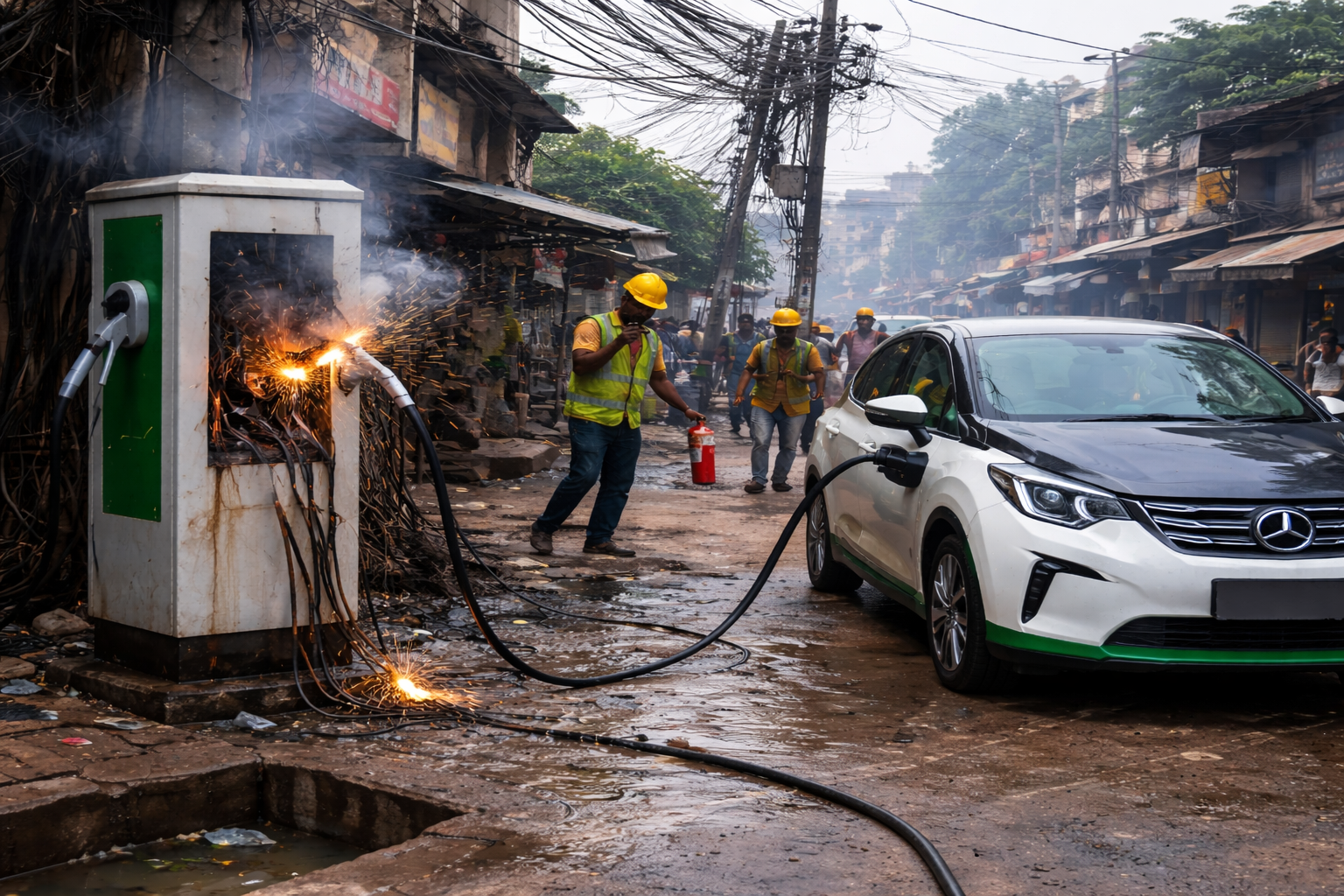
Electrical Safety Challenges with EV Infrastructure in India
Introduction
The rapid adoption of electric vehicles (EVs) in India is reshaping mobility and energy consumption. With government incentives, rising fuel costs, and sustainability goals, EVs are increasingly seen as the future of transport. However, this transition brings with it a new set of electrical safety challenges. Unlike conventional vehicles, EVs rely heavily on complex electrical systems, lithium-ion batteries, and charging infrastructure—all of which introduce risks if not managed properly.
Recent incidents in Maharashtra, including a battery fire in Thane (Feb 2026) and a commercial blaze in Andheri (Jan 2026), highlight the urgent need to address these challenges. These events underscore the importance of electrical safety audits in India, robust training, and preventive measures to safeguard lives, property, and the credibility of EV adoption.
Case Study 1: EV Battery Fire – Thane, Maharashtra (Feb 1–2, 2026)
On February 1, 2026, a battery of an electric two-wheeler exploded during indoor charging in a third-floor flat at Diva, Thane.
- Cause: Likely thermal runaway in the lithium-ion battery due to overcharging, poor-quality cells, or a faulty charger in an enclosed space.
- Impact: The fire ignited a nearby sofa and furniture, spreading through electrical wiring. Household items were destroyed, though fortunately no casualties were reported. The blaze was contained within one room by the fire brigade.
- Losses: Moderate property damage, including burnt furniture and wiring.
- Prevention Measures:
- Charge EVs in ventilated outdoor areas.
- Use manufacturer-approved chargers.
- Install circuit breakers/RCCBs.
- Avoid overnight charging.
- Conduct regular battery inspections.
- Check adequacy of electrical wiring specifications
This incident highlights the risks of indoor charging and the importance of safe electrical practices in residential settings. Also the basic electrical wiring may not be sufficient enough to support additional EV load, which may be verified.
Case Study 2: Commercial Fire – Andheri, Mumbai (Jan 7, 2026)
On January 7, 2026, a blaze erupted at a commercial complex in Andheri, Mumbai.
- Cause: A short circuit in electrical panels sparked lithium-ion batteries stored or used in offices, leading to rapid fire spread and thick smoke through corridors and shafts.
- Impact: Two fatalities due to smoke inhalation, multiple injuries, and extensive structural damage across several floors.
- Losses: Significant economic damage to IT and textile firms housed in the complex.
- Prevention Measures:
- Install smoke detectors and fire-resistant wiring.
- Store lithium-ion batteries in specialized cabinets.
- Conduct annual electrical safety audits as per NBC / NEC
- Prohibit indoor battery charging/storage.
- Train staff on evacuation procedures.
This tragedy illustrates the compounded risks of poor electrical safety in commercial hubs, where EV batteries and electrical systems coexist with high human occupancy.
Why Do These Incidents Happen?
The common thread in both cases is electrical safety lapses. Key factors include:
- Thermal Runaway: Lithium-ion batteries can overheat and ignite if overcharged or damaged.
- Poor Quality Components: Substandard cells and chargers increase risk.
- Inadequate Infrastructure: Residential and commercial buildings often lack proper EV charging provisions.
- Electrical Overloads: Short circuits and faulty wiring can trigger fires.
- Lack of Awareness: Users often charge EVs indoors or overnight without understanding risks. Basic wiring practices also not being followed
Major Electrical Safety Challenges with EV Infrastructure
1. Residential Charging Risks
Most EV owners charge vehicles at home. Without proper ventilation, approved chargers, and RCCBs, risks of fire and electrocution rise significantly.
2. Commercial Complexes and Battery Storage
Offices and warehouses storing lithium-ion batteries face risks of short circuits, smoke inhalation hazards, and rapid fire spread.
3. Public Charging Stations
Improperly installed charging stations can cause earth faults, overheating, and electrocution risks. Regular earth fault loop impedance tests are essential.
4. Battery Quality and Maintenance
Low-cost EVs often use poor-quality cells. Without thermography inspections and periodic testing, risks of thermal runaway increase.
5. Employee Awareness and Training
Lack of electrical safety training among staff leads to unsafe practices, delayed response, and higher casualties during incidents.
Empowering Employees with Safe Electrical Practices
To mitigate risks, employees and users must be empowered through:
- Electrical Safety Training: Regular sessions on safe charging, handling batteries, and emergency response.
- Awareness Campaigns: Posters, digital reminders, and case studies of incidents.
- PPE Usage: Gloves, insulated tools, and arc-flash protective gear for operating and maintenance staff.
- Reporting Culture: Encourage reporting of unsafe conditions and near miss incidents without fear.
Role of Electrical Safety Audits in EV Infrastructure
Annual electrical safety audits in India are critical to ensuring safe EV adoption especially in facilities like Residential buildings, hotels, hospitals and other commercial properties
Essential Tests During EV Safety Audits:
- Thermography: Detect hotspots in panels and chargers.
- Earth Fault Loop Impedance Tests: Ensure proper fault current paths.
- Insulation Resistance Tests: Check wiring and battery connections.
- Earth Resistance Tests: Verify grounding effectiveness.
- Circuit Breaker Testing: Confirm protective devices function correctly.
- Residual Current Device (RCD) Testing: Ensure leakage protection.
Preventive Measures for EV Safety
- Residential Users: Charge outdoors, avoid overnight charging, use RCCBs.
- Commercial Facilities: Install smoke detectors, fire-resistant wiring, and battery cabinets.
- Public Charging Stations: Conduct annual audits, earth fault tests, and thermography.
- Manufacturers: Ensure quality cells, chargers, and provide clear safety instructions.
- Government/Regulators: Enforce NBC 2016 compliance, mandate annual audits, and promote awareness campaigns.
Recap
India’s EV revolution is inevitable, but its success depends on electrical safety. The incidents in Thane and Andheri serve as stark reminders of the risks posed by poor practices and inadequate infrastructure. By conducting annual electrical safety audits in India, empowering employees with electrical safety training, and implementing preventive measures like thermography and earth fault loop impedance tests, we can build a safer EV ecosystem.
Electrical safety is not just about compliance—it is about protecting lives, property, and the credibility of India’s EV future.
—--------------------------------------------------------------------------------------------------------------------
Note: All blogs are prepared by Sustenergy Foundation based on our research in the respective sector/industry and on factual audits conducted by us, drawing from our expertise in the field through electrical safety audits, energy audits, or other related studies. These blogs are published with the purpose of creating awareness and sharing technical expertise with employees at various levels — from laypersons to experts — and are prepared in accordance with the blog policy of Sustenergy Foundation.
Prepared by Sreelakshmi. S Head - Engineering
Reviewed and approved by Jayakumar Nair, Managing Director